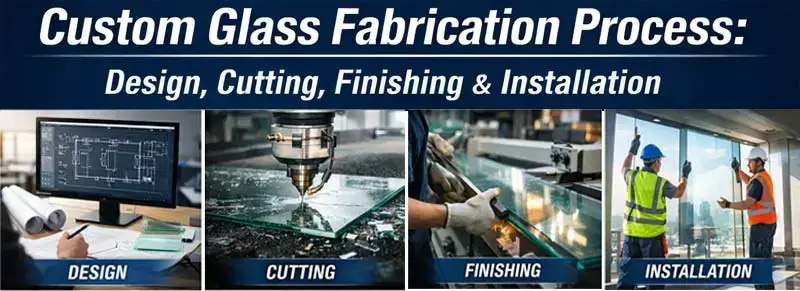
Glass fabrication is a precise and multi-stage process that transforms raw glass into functional, decorative, and architectural products. From concept development to final installation, every step requires technical expertise, advanced machinery, and skilled craftsmanship. This guide explains the complete glass fabrication process, helping architects, designers, builders, and buyers understand how high-quality glass products are made.
Design & Concept Development
The glass fabrication process begins with design planning. At this stage, client requirements such as size, thickness, shape, functionality, and aesthetics are defined.
Key considerations include:
- Type of glass (float, tempered, laminated, decorative)
- Load-bearing and safety requirements
- Environmental conditions
- Custom patterns, colors, or finishes
Designs are prepared using CAD (Computer-Aided Design) software to ensure accuracy, minimize waste, and allow precise customization.
Glass Selection & Raw Material Preparation
Selecting the right glass is critical for performance and durability. Depending on the application, fabricators choose from:
- Clear or ultra-clear float glass
- Toughened (tempered) glass
- Laminated safety glass
- Frosted, tinted, or patterned glass
The raw glass sheets are inspected for defects and prepared for cutting.
Glass Cutting & Shaping
Once approved, glass sheets are cut according to design specifications using automated CNC cutting machines or manual tools for custom work.
Shaping processes may include:
- Straight and curved edge cutting
- Drilling holes for fittings
- Notching for hardware installation
Accuracy at this stage ensures perfect alignment during installation.
Edge Processing & Finishing
Cut glass edges are treated to improve safety and appearance. Common edge finishes include:
- Seamed edges (for basic safety)
- Flat-polished edges (for premium finishes)
- Beveled or pencil-polished edges
Proper edge processing prevents chipping and increases glass strength.
Heat Treatment & Strengthening
To enhance durability and safety, glass often undergoes heat treatment:
- Tempering: Glass is heated and rapidly cooled to increase strength up to five times
- Heat-strengthening: Provides moderate strength and thermal resistance
Tempered glass breaks into small, harmless pieces, making it ideal for doors, facades, and partitions.
Surface Treatments & Customization
At this stage, glass can be customized to meet functional and decorative needs:
- Frosting or acid etching
- Digital or ceramic printing
- Coating for UV protection or energy efficiency
- Sandblasting or engraving
These treatments add value, privacy, and visual appeal.
Quality Inspection & Testing
Before dispatch, every glass product undergoes strict quality control:
- Dimensional accuracy checks
- Visual inspection for scratches or bubbles
- Strength and safety testing
Only glass that meets industry standards is approved for installation.
Packaging & Transportation
Glass products are carefully packed using protective materials and wooden crates to prevent damage during transit. Proper labeling and handling instructions ensure safe delivery to the site.
Glass Installation & Final Fitment
The final stage is on-site installation, carried out by trained professionals. Installation includes:
- Frame alignment and leveling
- Secure fitting with hardware or sealants
- Final inspection for safety and aesthetics
Correct installation ensures long-term performance and structural integrity.
The glass fabrication process—from design to installation—is a blend of engineering precision, modern technology, and skilled craftsmanship. Understanding each stage helps clients make informed decisions and ensures superior quality outcomes. Whether for residential, commercial, or decorative use, professionally fabricated glass enhances both functionality and visual appeal.