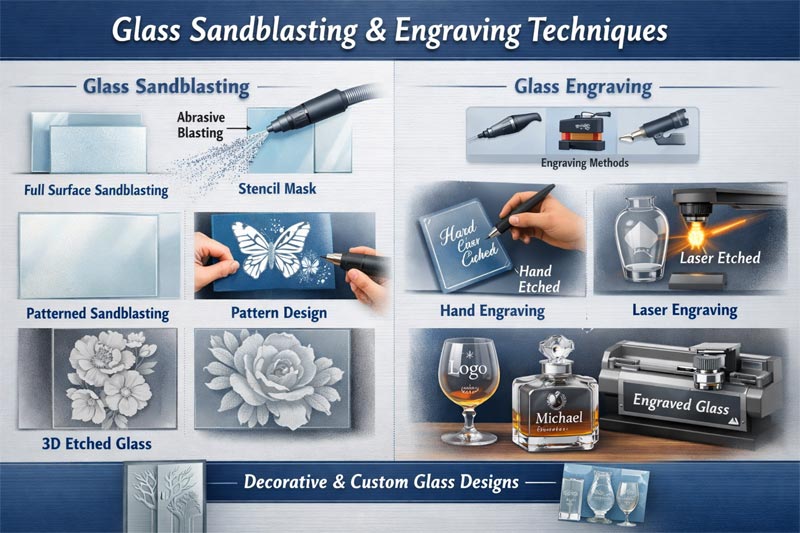
Glass sandblasting and engraving techniques are widely used to transform plain glass into decorative, textured, and artistic surfaces. These techniques add elegance, privacy, and customization to glass products, making them popular in architecture, interior design, branding, and handcrafted décor. In this guide, we explore the process, types, applications, and benefits of glass sandblasting and engraving.
What Is Glass Sandblasting?
Glass sandblasting is a surface treatment process where fine abrasive particles are blasted at high pressure onto glass to create a frosted or etched effect. The impact gently roughens the surface, producing a smooth matte finish or intricate patterns depending on the design.
This technique is commonly used for decorative glass panels, doors, partitions, mirrors, signage, and custom glass art.
What Is Glass Engraving?
Glass engraving is a more detailed and artistic process that involves carving designs, text, or images into the glass surface. Engraving can be done using sandblasting, rotary tools, laser engraving, or hand-engraving methods.
Engraved glass is often used for trophies, awards, luxury décor, branded glassware, and handcrafted artistic pieces.
Types of Glass Sandblasting Techniques
1. Full Surface Sandblasting
This technique covers the entire glass surface, creating a uniform frosted appearance. It is ideal for privacy glass used in windows, office partitions, and shower enclosures.
2. Patterned Sandblasting
Custom designs, logos, or motifs are created using stencils or masks. Only selected areas are blasted, allowing clear and frosted contrasts.
3. Deep Sandblasting
By increasing pressure and exposure time, deeper textures and multi-layered designs can be achieved. This technique is often used for artistic and luxury glass products.
Common Glass Engraving Methods
1. Sandblasted Engraving
A precise and durable method suitable for large designs, logos, and architectural glass. It offers long-lasting results without fading.
2. Hand Engraving
A traditional technique performed by skilled artisans using handheld tools. This method is popular for handcrafted glass items and heritage art.
3. Laser Engraving
A modern technique that uses laser technology to engrave fine details with high accuracy. Best suited for logos, serial numbers, and small decorative items.
Step-by-Step Glass Sandblasting Process
- Design Creation – Digital or hand-drawn artwork is prepared
- Stencil Application – A protective mask is applied to the glass surface
- Sandblasting – Abrasive particles are blasted at controlled pressure
- Cleaning & Finishing – Residue is removed to reveal the final design
Applications of Sandblasted & Engraved Glass
- Decorative glass panels and partitions
- Doors, windows, and shower enclosures
- Mirrors and tabletops
- Custom glass signage and branding
- Handcrafted glass décor items
- Corporate gifts and trophies
Benefits of Glass Sandblasting and Engraving
- Enhances aesthetic appeal
- Provides privacy without blocking light
- Highly durable and fade-resistant
- Customizable designs for branding
- Suitable for both modern and traditional spaces
Why Choose Sandblasted or Engraved Glass?
Glass sandblasting and engraving techniques offer unmatched versatility in design and functionality. Whether for architectural use or handcrafted décor, these methods create timeless, elegant glass products that combine beauty with durability.
Glass sandblasting and engraving are essential techniques in modern glass fabrication and traditional glass artistry. From simple frosted finishes to intricate handcrafted designs, these processes allow endless creative possibilities. Choosing the right technique ensures high-quality, customized glass products that elevate both residential and commercial spaces.